
After more than two decades of negotiations, the European Union and Mercosur have reached a historic trade agreement covering a market of more than 700 million people. The agreement brings the EU closer to Argentina, Brazil, Paraguay and Uruguay and creates a new framework for trade, investment and economic cooperation between the two regions.
The agreement is significant at a time when companies are reassessing supply chains, looking for new markets and competing for access to energy, raw materials and industrial capacity. Lower tariffs and fewer trade barriers will make it easier for European companies to export to Mercosur, source products and materials from the region, participate in public tenders and establish local operations.
For European businesses, the agreement is therefore about more than trade. It opens new opportunities in one of the world’s largest emerging economic regions, with Brazil at the centre of the Mercosur market.
What Is the EU-Mercosur Agreement?
The EU-Mercosur agreement brings together the European Union and the four founding Mercosur countries: Argentina, Brazil, Paraguay and Uruguay. The agreement covers trade in goods and services, investment, public procurement, intellectual property, customs and other areas of economic cooperation.
The agreement consists of two linked instruments: the EU-Mercosur Partnership Agreement (EMPA) and the Interim Trade Agreement (iTA). The iTA focuses on trade and investment and has been provisionally applied since 1 May 2026. It will eventually be replaced by the full Partnership Agreement once that agreement has been fully ratified.
The agreement is the result of more than two decades of negotiations. The EU and Mercosur reached a political agreement in December 2024, signed the agreements in January 2026 and began provisional application of the trade agreement in May 2026.
For businesses, the important change is simple: trade between the two regions now operates under a framework designed to reduce tariffs, remove trade barriers and make market access more predictable.
Why the Agreement Matters
The EU-Mercosur agreement creates a trade relationship covering more than 700 million people. It also connects two large economic regions at a time when companies are looking to diversify markets and supply chains.
The EU is already an important trading partner for Mercosur. In 2025, EU exports to the four Mercosur countries reached €53.3 billion, while Mercosur exports to the EU totalled €56.1 billion. European exports are concentrated in machinery, chemicals, pharmaceuticals and transport equipment, while Mercosur exports to Europe include large volumes of agricultural and mineral products.
The agreement can strengthen this relationship in several ways:
- Lower tariffs make European goods more competitive in Mercosur.
- Fewer non-tariff barriers make cross-border trade easier.
- Improved access to services markets creates opportunities beyond physical goods.
- Public procurement provisions give European companies better access to government contracts.
- Clearer rules for customs and trade make cross-border operations more predictable.
- Improved access to critical raw materials supports European supply-chain diversification.
The agreement therefore goes beyond simply reducing import duties. It creates a broader framework for trade, investment and business cooperation between Europe and Mercosur.
Lower Tariffs and Better Market Access
Tariff reduction is one of the most direct effects of the agreement. For EU exporters, tariffs on more than 91% of goods exported to Mercosur will be eliminated over time, with different transition periods depending on the product.
Several major European industries stand to benefit.
Automotive
Mercosur currently applies high import duties to European vehicles. Under the agreement, duties on EU electric and hybrid vehicles fall from 35% to 25% immediately, while duties on internal-combustion engine cars are reduced from 35% to 17.5%. Tariffs on many car parts will then be phased out over the following years.
Machinery and industrial equipment
Current tariffs of 14–20% on machinery and appliances will be gradually eliminated for 93% of EU exports in these categories, in most cases over ten years.
Pharmaceuticals
Pharmaceutical products currently face tariffs of up to 14%. These will be phased out for 90% of EU pharmaceutical exports over a ten-year period.
Agriculture and food
European food and agricultural exporters will also gain improved access to Mercosur markets. The agreement provides tariff reductions and quotas for products including olive oil, wine, beer and other food products, while sensitive agricultural sectors remain protected through tariff-rate quotas and safeguards.
The impact will not be limited to tariffs. The agreement also addresses technical barriers, customs procedures, conformity assessments and international standards, reducing some of the administrative barriers that can make cross-border trade more difficult.
Access to Public Procurement and Tenders
One of the most important changes for European companies is improved access to public procurement in Mercosur countries.
The agreement opens parts of Mercosur’s government procurement markets to European companies, allowing them to compete for contracts under the rules and coverage set out in the agreement. In Brazil alone, the federal public procurement market is worth more than €8 billion per year.
The opportunities cover areas such as infrastructure, transport, energy, construction, engineering and other public services. The agreement also sets rules on the publication of procurement information, tender procedures and transparency.
For European companies, this means that market access is no longer limited to selling products or services to private customers. Public tenders can also become a route into the Brazilian market.
The agreement does not mean that every Brazilian government contract is automatically open to European companies. Coverage depends on the contracting entity, type of procurement, value thresholds and the specific commitments made by Brazil under the agreement.
What Does It Mean for European Companies?
The agreement creates opportunities across several types of business activity↗.
Exporters
Lower tariffs make European products more competitive in Mercosur markets. This is particularly relevant for companies selling machinery, vehicles, chemicals, pharmaceuticals and other industrial products.
Service providers
The agreement also covers trade in services and establishment. It includes commitments relating to areas such as telecommunications, financial services, transport and business services.
Manufacturers
European manufacturers can use the agreement not only to export finished products, but also to develop sourcing and production relationships within Mercosur.
Investors
Companies looking at Brazil or other Mercosur markets can benefit from better access to trade, investment and supply-chain opportunities. The agreement also creates a framework for the movement of certain business personnel, supporting companies operating across both regions.
The practical impact will depend on the sector and the individual company’s business model. For some companies, the opportunity will be lower-cost exports. For others, it may be local production, sourcing, partnerships or participation in public tenders.
Brazil: The Largest Market in Mercosur
Brazil is the largest economy and market within Mercosur, making it particularly important for European companies looking to benefit from the agreement.
With more than 200 million people, a large industrial base and major agricultural, energy and natural resource sectors, Brazil offers opportunities across a wide range of industries.
The country is already the EU’s largest trading partner in Mercosur. European companies are active in Brazil across sectors including automotive, machinery, chemicals, pharmaceuticals, energy, financial services and infrastructure.
The agreement can strengthen these existing commercial links while creating opportunities in areas such as:
- Industrial manufacturing
- Agribusiness and food
- Energy and renewable energy
- Infrastructure and construction
- Mining and critical raw materials
- Technology and digital services
- Logistics and transportation
- Financial and professional services
For European companies, Brazil can therefore serve both as a large domestic market and as a base for wider operations in South America.
Strategic Sectors and Investment Opportunities
The agreement comes at a time when several sectors in Brazil and the wider Mercosur region are attracting international investment.
Energy
Brazil’s renewable energy resources create opportunities in wind, solar, hydropower, energy storage and related infrastructure. European companies with expertise in energy technology, project development and engineering can find opportunities across the value chain.
Agribusiness
Brazil is one of the world’s largest agricultural producers and exporters. Opportunities extend beyond primary production into agricultural technology, food processing, logistics, storage and supply-chain infrastructure.
Infrastructure
Brazil needs investment in transport, logistics, energy networks, sanitation and urban infrastructure. Better access to public procurement adds another route for European engineering, construction and infrastructure companies.
Mining and critical raw materials
Mercosur has significant reserves of minerals and other raw materials needed for industrial production and the energy transition. The EU agreement strengthens cooperation and market access in this area. The EU already sources a large share of its niobium imports from Mercosur.
Technology and digital services
Brazil has one of Latin America’s largest technology markets, with strong demand for cloud computing, financial technology, enterprise software and digital infrastructure. European technology and professional-services companies can use improved market access alongside local partnerships and operations.
These sectors are not created by the trade agreement itself. What the agreement does is make it easier for European companies to participate in markets where these opportunities already exist.
Supply Chains and European Manufacturing
The agreement can also change how European companies structure their supply chains. Lower tariffs and clearer trade rules make it easier to source products and components from Mercosur and to sell finished goods into the region.
For manufacturers, this creates options beyond simply exporting from Europe. Companies can source raw materials or components from Brazil and other Mercosur countries, establish local production, or combine European technology and expertise with local manufacturing capacity.
Brazil is particularly relevant because of its large industrial base and strong position in sectors such as agriculture, mining, energy and manufacturing. This gives European companies access to both suppliers and customers within the same market.
Supply-chain diversification is also becoming a practical business priority. Companies that have relied heavily on a small number of suppliers or production locations can use the agreement to assess alternative sourcing and manufacturing options in South America.
The opportunity is therefore not only about selling more products to Brazil. It is also about building more integrated supply chains between Europe and Mercosur.
Infrastructure, Logistics and Trade
More trade requires the infrastructure to move goods, energy and information between markets.
Brazil already has a large network of ports, roads, railways, warehouses and logistics operators, but infrastructure remains an important part of the country’s economic development. Greater trade volumes can create additional demand for logistics capacity and improvements to transport corridors.
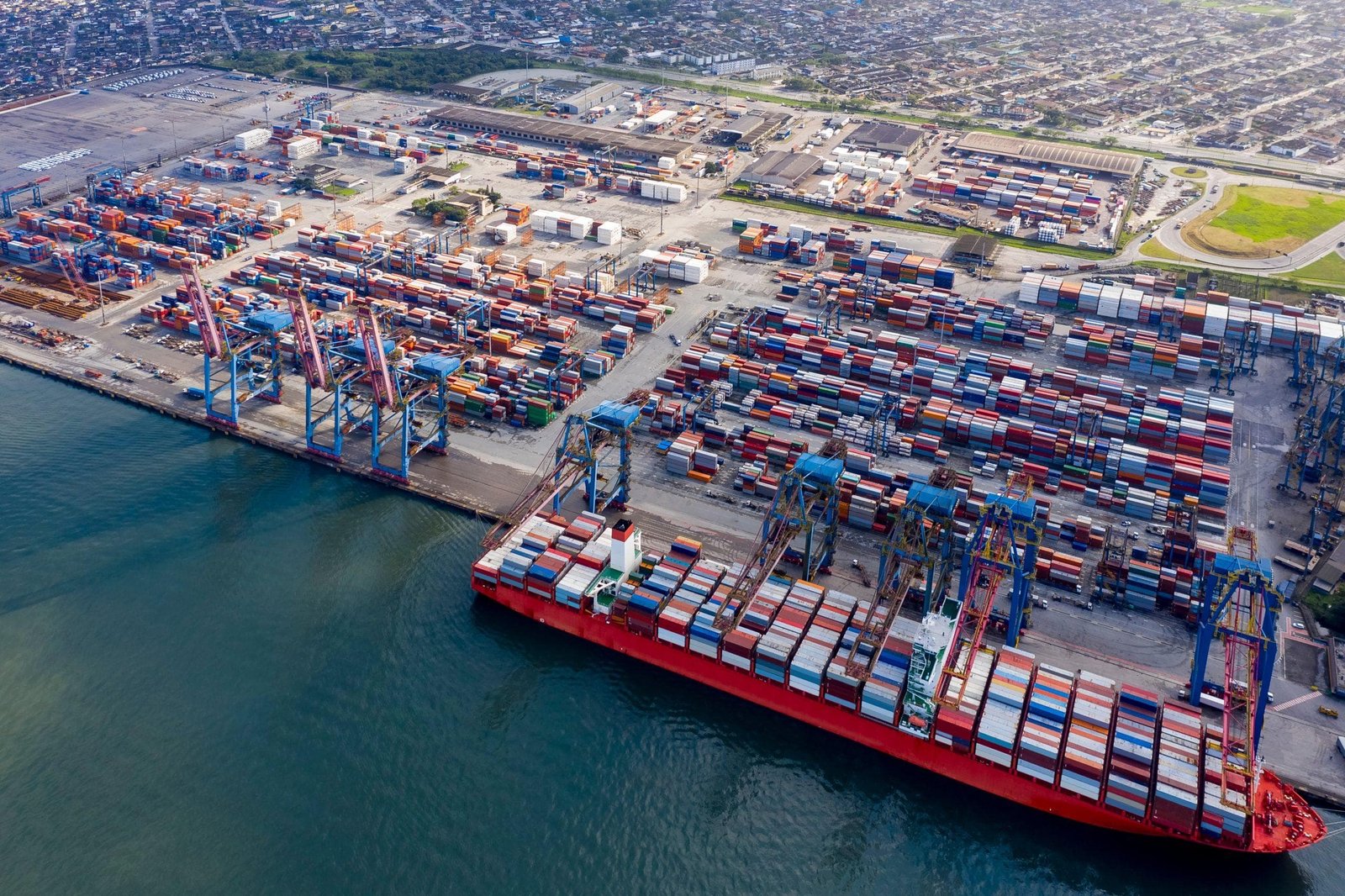
Ports will play an important role in this process. Brazil’s major export and import gateways connect its industrial and agricultural regions with international markets, while improvements in rail and road infrastructure can reduce transport costs between production centres and ports.
The same applies to energy infrastructure. Investment in generation, transmission and storage supports industrial activity and the expansion of energy-intensive sectors.
For European companies, this creates opportunities beyond the direct export of goods. Engineering, construction, logistics, infrastructure technology and project development companies can all participate in the investment required to support higher levels of trade.
The EU-Mercosur agreement does not create these infrastructure needs on its own. It strengthens the commercial framework within which these investments can take place.
Implementation: What Happens Now?
The Interim Trade Agreement (iTA) has been provisionally applied since 1 May 2026. It is designed to bring the trade and investment commitments into effect while the broader EU-Mercosur Partnership Agreement goes through its full ratification process.
This means companies do not have to wait for the full Partnership Agreement to take advantage of the trade provisions that are already being applied.
However, not all changes happen at once. Many tariffs are being reduced in stages, with different transition periods depending on the product. Sensitive agricultural products also remain subject to quotas and safeguard mechanisms.
For businesses, implementation means reviewing the practical impact on their own products and operations:
- Which tariffs apply today?
- When will those tariffs be reduced or removed?
- What rules of origin apply?
- Are there new opportunities in public procurement?
- What technical or regulatory requirements still apply?
- Does the agreement change the economics of sourcing or production in Mercosur?
The agreement provides the framework. Companies now need to work out how that framework affects their individual business.
What European Companies Should Do Now
The agreement provides better market access, but companies still need to understand how the new rules apply to their business.
For companies considering Brazil or other Mercosur markets, a practical first step is to review their current products, suppliers and commercial activities against the new agreement.
Review your tariff position
Check which import duties currently apply to your products and when they will be reduced or removed. Tariff reductions are phased in differently across product categories.
Check rules of origin
Preferential tariffs apply only when products meet the agreement’s rules of origin. Companies should therefore review where their products and components are manufactured and whether they qualify for preferential treatment.
Look beyond exports
The agreement creates opportunities beyond selling products into Mercosur. Companies can assess local production, sourcing, services, partnerships and public procurement as part of their market strategy.
Review public tenders
Companies active in infrastructure, engineering, energy, construction and other sectors should assess whether government procurement opportunities covered by the agreement are relevant to them. EU companies can already bid for covered public contracts under the provisional trade agreement.
Consider local presence
For some businesses, exporting from Europe will make sense. For others, establishing a local operation, finding a Brazilian partner or building a local supply chain may offer better commercial opportunities.
The agreement removes some barriers to entering the Mercosur market. The next step is deciding how to use that access.
Brazil as a Long-Term European Business Partner
The EU-Mercosur agreement strengthens an economic relationship that already exists at significant scale. The EU is Mercosur’s second-largest trading partner in goods, while European companies already have a substantial investment presence across the region. EU investment stock in Mercosur reached €390 billion in 2023.
Brazil stands out within Mercosur because of its economic scale, industrial base, natural resources and domestic market.
For European companies, this creates several ways to participate in the Brazilian economy:
- Exporting European products and technology
- Sourcing raw materials and components
- Establishing local production
- Developing infrastructure and energy projects
- Providing professional and digital services
- Participating in public tenders
- Building partnerships with Brazilian companies
The trade agreement does not remove the practical challenges of doing business in Brazil. Companies still need to deal with local regulations, taxation, Portuguese, logistics and the specific requirements of the Brazilian market.
What changes is the wider commercial framework. European companies now have better access to a market that was already important and is becoming more closely connected to Europe
Conclusion
The EU-Mercosur agreement removes tariffs and reduces trade barriers between two major economic regions. It also opens opportunities in services, public procurement, investment and supply chains.
For European companies, the opportunity goes beyond exporting more products. Brazil and the wider Mercosur region can become destinations for investment, production, sourcing, infrastructure projects and long-term business expansion.
The agreement provides the framework. The real opportunity lies in how companies use it.