Procter & Gamble, Foxconn, Samsung and many more. Why are so many multinational companies establishing production facilities in the middle of the Amazon rainforest?
The answer lies in one of the most important differentiators for any manufacturing business: taxes.
To stimulate economic activity in the Amazon and promote industrial development in one of Brazil’s less developed regions, the Brazilian government offers significant tax incentives to companies operating within the Zona Franca de Manaus (ZFM). Here, federal and state taxes are – provided a successful completed approval process – substantially reduced, making Manaus a potent alternative to Brazil’s more established industrial regions, such as São Paulo.
The question, however, is whether these tax benefits outweigh the additional logistical and operational costs in such a remote location. And for foreign companies in particular: how accessible is the ZFM when it comes to establishing and managing operations in the zone?
What is the Free Trade Zone?
The Zona Franca de Manaus (ZFM) forms part of a broader regional development area known as the Amazônia Ocidental, covering the states of Amazonas, Acre, Rondônia and Roraima. The overall region is vast – almost 2.5x the size of Texas – with economic activity highly concentrated in Manaus, the capital of Amazonas, making it the de facto center of the free trade zone.
Established in 1967, the ZFM was created to bring economic activity and industrial development to a remote and underdeveloped part of Brazil. Manaus was, especially at the time, geographically isolated from the country’s main economic centres and its limited infrastructure made it difficult for businesses to compete with better-located industrial regions. The government therefore introduced a system of tax incentives designed to attract investment and make industrial production in the region commercially viable.
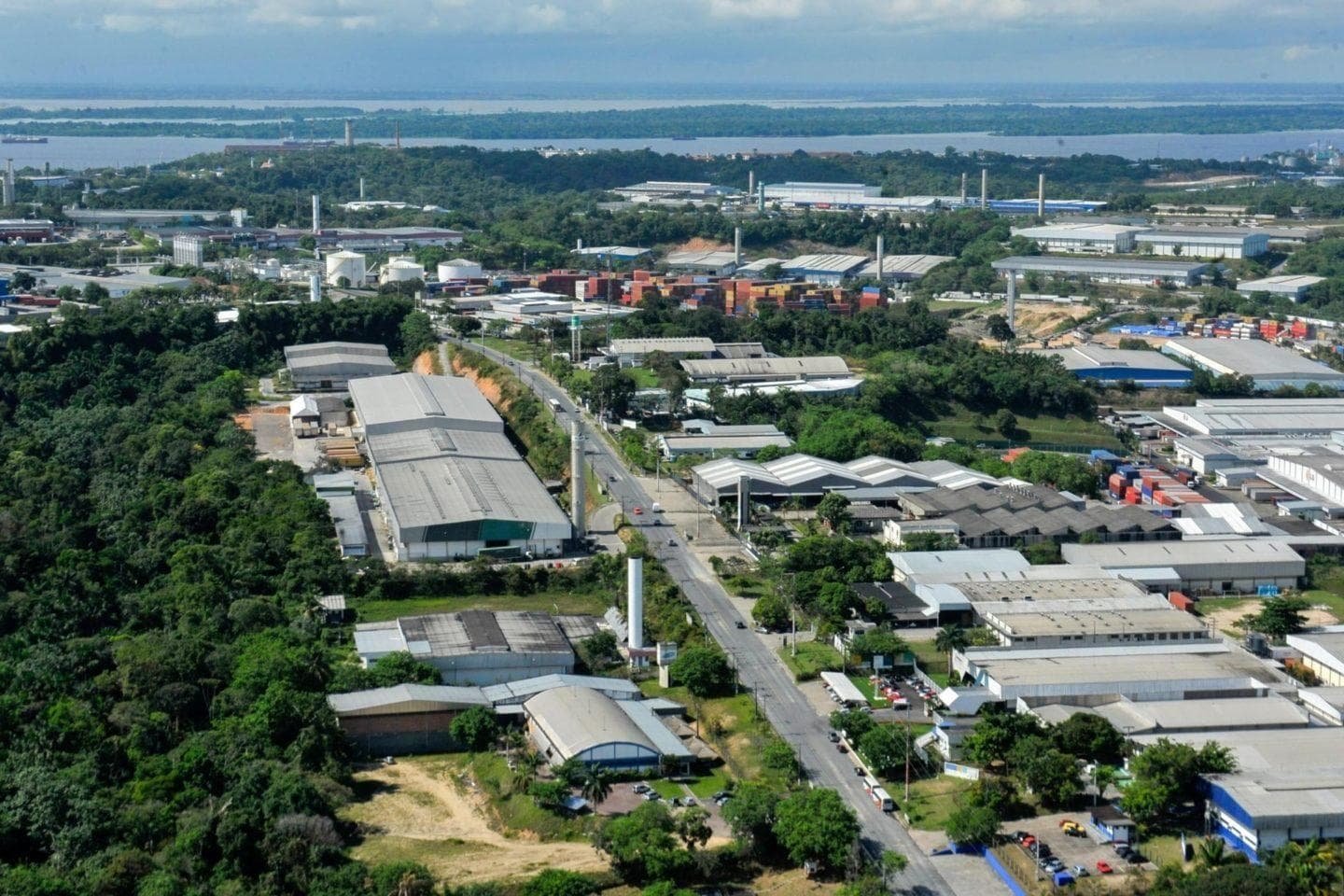
The majority of industrial activity is concentrated in the Polo Industrial de Manaus (PIM) which lies in the city of Manaus on the shores of the Amazon River. Over the decades, the PIM has developed into one of Brazil’s largest manufacturing clusters, with hundreds of (international) companies operating across the entire industrial sector, from electronics to chemicals and healthcare. Multinationals operate alongside Brazilian companies and have access to an ever growing base of local suppliers, freight forwarding and port logistics.
How the ZFM Works
The economic rationale behind the ZFM lies primarily in its tax incentives. Companies operating within the zone benefit from significant reductions or exemptions on a range of federal and state taxes, particularly on the import of raw materials and semi-finished products.
Imported goods entering the ZFM benefit from exemptions from Import Tax (II) and Industrialised Products Tax (IPI), while additional incentives apply to PIS/COFINS and the state-level ICMS. The exact treatment depends on the type of product, its origin and how it is used within the ZFM.
The benefits are not granted automatically. Companies seeking to establish an industrial operation must submit an industrial project to SUFRAMA for approval. The application needs to specify the products to be manufactured, the production process, expected investment and other relevant parameters. Approved projects can then access the incentives within the limits and conditions established by the ZFM framework.
Another important requirement is to demonstrate a minimum amount of operations to be performed locally in order for the production process to be considered as effectively taking place within the ZFM. Outlined in the Processo Produtivo Básico (PPB), the requirements to qualify vary by product and by which stages of the production process actually take place in Manaus.
Building a supply chain in the Amazon
The tax incentives may make manufacturing in Manaus attractive, but they do not change the region’s geography. For companies operating in the PIM, establishing a reliable and economically viable supply chain is therefore an essential part of the business model.
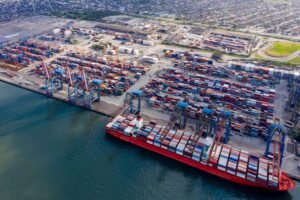
A significant share of the inputs used by manufacturers in Manaus is sourced outside Brazil. Components, raw materials and semi-finished products are shipped to Brazil and then transported further inland. Because the road connections between Manaus and the main seaports aren’t sufficiently reliable, most international cargo reaches the ZFM by river barges.
For containerised cargo, the most common route is through the ports of Pará, from where containers are transferred to barges and transported approximately 1,600 kilometres upriver to Manaus. Depending on the route and conditions, the river leg can take around a week. The city of Manaus has an established port and logistics infrastructure dedicated to handling the flow of industrial goods into the PIM.
These supply-chain conditions mean that lead times are longer and seasonal variations in river levels need to be accounted for, leading to different approaches in inventory planning and management. However, with the PIM area having developed so much over the past decades, specialised freight forwarders and logistics providers have become quite reliable in getting goods delivered according to plan.
Is the ZFM Right for Your Business?
he ZFM is not equally attractive for every manufacturer. Its incentives are most relevant for companies that can incorporate the tax benefits into a larger industrial and supply-chain strategy.
For companies importing significant volumes of components, raw materials or semi-finished products into Brazil, the tax savings can have a material impact on the economics of local production. The scale of the existing industrial base provides access to specialised suppliers, logistics providers and an experienced manufacturing workforce. SUFRAMA currently lists around 600 industrial companies operating in the PIM.
Most production from the PIM is ultimately destined for the Brazilian market, rather than for export. It shows that the use of the ZFM as a manufacturing base is relevant for those companies serving the Brazilian (consumer) market instead of an in-and-out supply chain model.
Another thing to take into consideration is that establishing a presence in the PIM involves more than setting up a factory. The investment requires an approved industrial project, compliance with production requirements and setting up a reliable supply chain of goods moving into Manaus. Knowledge and understanding of Brazilian tax laws, customs procedures, regulations and operational requirements also play a key factor.
In the end, utilising the ZFM is a strategic decision for which several factors need to be considered, weighing pro’s against con’s. For a company planning manufacturing operations in Brazil, with inputs coming from abroad and finished products delivered to the Brazilian market, the ZFM is definitely worth a closer look.
Meanwhile, the flow of new projects into the ZFM indicates that companies continue to see opportunities in the model. In 2025 alone, SUFRAMA approved 56 new projects representing R$1.25 billion in planned investment and more than 2,000 expected direct jobs.