Procter & Gamble, Foxconn, Samsung and many more. Why are so many multinationals building production facilities in the middle of the Amazon rainforest?
The answer is one of the biggest differentiators in manufacturing: taxes.
To bring economic activity to the Amazon and boost industrial development in one of Brazil’s less developed regions, the Brazilian government offers significant tax incentives to companies in the Zona Franca de Manaus (ZFM). Once your project is approved, federal and state taxes are substantially reduced. That makes Manaus a serious alternative to Brazil’s more established industrial regions, such as São Paulo.
The question is whether those savings outweigh the extra logistical and operational costs of such a remote location. And for foreign companies in particular: how easy is it to set up and run operations in the zone?
What is the Free Trade Zone?
The Zona Franca de Manaus is part of a wider regional development area called the Amazônia Ocidental, which covers the states of Amazonas, Acre, Rondônia and Roraima. The region is vast, almost 2.5 times the size of Texas, but economic activity concentrates in Manaus, the capital of Amazonas. That makes the city the de facto centre of the zone.
The ZFM was established in 1967 to bring industry to a remote, underdeveloped part of Brazil. Manaus was geographically isolated from the country’s economic centres, especially back then, and its limited infrastructure made it hard for businesses to compete with better-located industrial regions. The government’s answer was a system of tax incentives that made production in the region commercially viable.
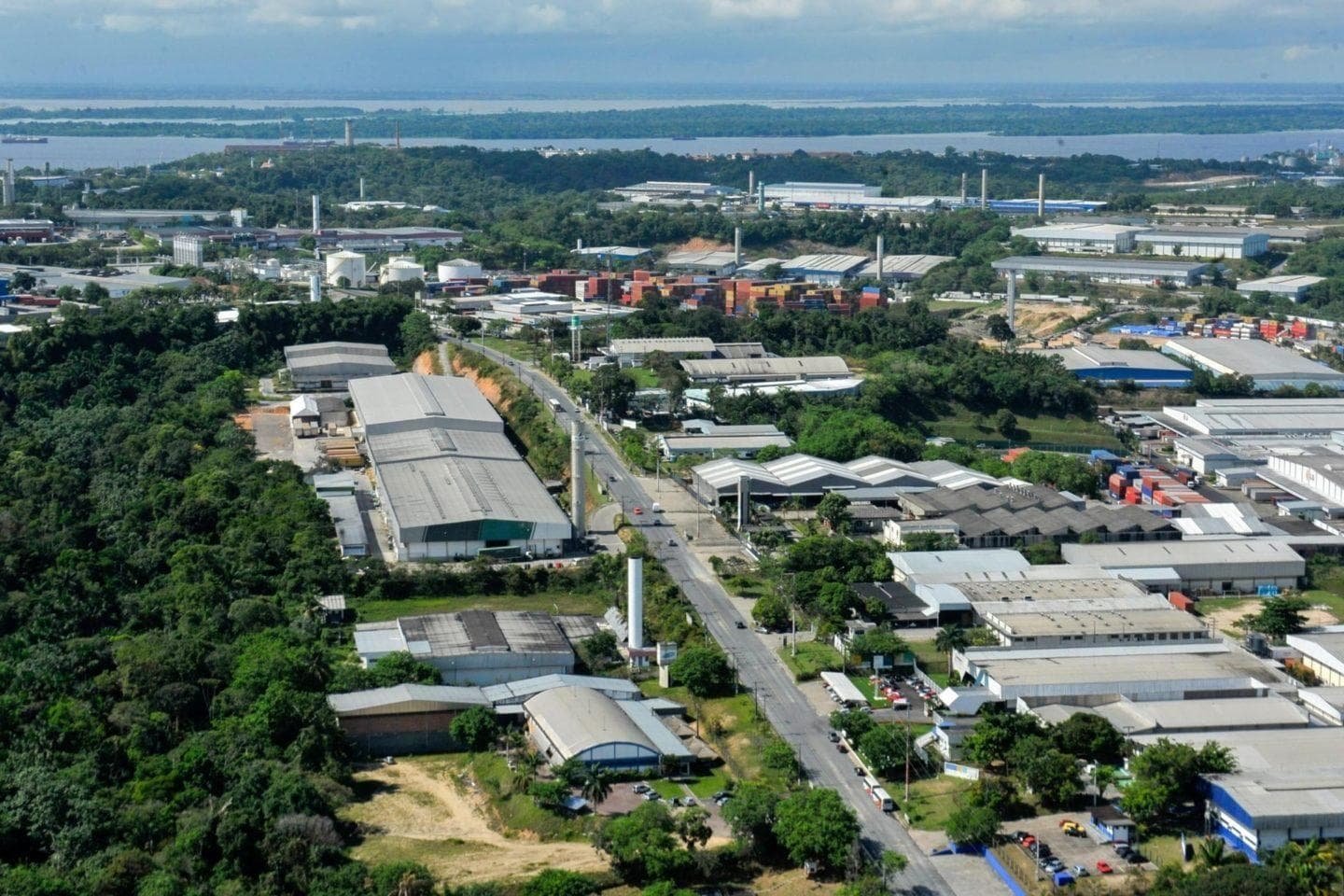
Most industrial activity sits in the Polo Industrial de Manaus (PIM), in the city of Manaus on the shores of the Amazon River. Over the decades it has grown into one of Brazil’s largest manufacturing clusters, with hundreds of companies, many of them international, in industries from electronics to chemicals and healthcare. Multinationals operate alongside Brazilian companies and can draw on a growing base of local suppliers, freight forwarders and port logistics.
How the ZFM Works
The tax incentives are the whole point. Companies in the zone get significant reductions or exemptions on a range of federal and state taxes, especially on imported raw materials and semi-finished products. Imported goods are exempt from Import Tax (II) and Industrialised Products Tax (IPI), with further incentives on PIS/COFINS and the state-level ICMS. The exact treatment depends on the product, its origin and how you use it in the ZFM.
Nothing is granted automatically. You submit an industrial project to SUFRAMA for approval, stating the products you will make, the production process, the expected investment and other parameters. Approved projects get the incentives within the limits and conditions of the ZFM framework.
You also have to show that enough of the work really happens in Manaus. The Processo Produtivo Básico (PPB) sets out these minimum local operations, and the requirements vary by product and by which production stages take place there.
Building a supply chain in the Amazon
Tax incentives make manufacturing in Manaus attractive, but they don’t change the geography. If you operate in the PIM, a reliable and economically viable supply chain is an essential part of your business model.
A large share of what Manaus manufacturers use comes from outside Brazil. Components, raw materials and semi-finished products are shipped to Brazil and then moved further inland. The road connections between Manaus and the main seaports aren’t reliable enough, so most international cargo arrives by river barge. For containers, the usual route runs through the ports of Pará, where the containers are transferred to barges for the trip of roughly 1,600 kilometres upriver to Manaus. Depending on the route and conditions, that river leg takes around a week. Manaus has an established port and logistics infrastructure built to handle the flow of industrial goods into the PIM.
The consequence is longer lead times, plus river levels that change with the seasons. You need to plan and manage inventory differently from a factory near the coast. The good news is that the PIM has developed so much over the past decades that specialised freight forwarders and logistics providers now deliver quite reliably.
Is the ZFM Right for Your Business?
Not for every manufacturer. The incentives pay off most for companies that can build them into a larger industrial and supply-chain strategy.
If you import large volumes of components, raw materials or semi-finished products into Brazil, the tax savings can change the economics of local production. The existing industrial base gives you access to specialised suppliers, logistics providers and an experienced manufacturing workforce. SUFRAMA currently lists around 600 industrial companies in the PIM.
Most PIM production ends up on the Brazilian market rather than abroad. The ZFM therefore fits companies serving Brazilian (consumer) demand, not an in-and-out supply chain model.
Keep in mind that a presence in the PIM involves more than setting up a factory. You need an approved industrial project, you have to meet the production requirements and you have to build a reliable supply chain into Manaus. Knowledge of Brazilian tax laws, customs procedures, regulations and operational requirements plays a key role as well.
In the end, using the ZFM is a strategic decision, and you need to weigh the pros against the cons. If you plan to manufacture in Brazil, with inputs from abroad and finished products for the Brazilian market, the ZFM is definitely worth a closer look.
Companies clearly still see opportunity in the model. In 2025 alone, SUFRAMA approved 56 new projects, representing R$1.25 billion in planned investment and more than 2,000 expected direct jobs.
Conclusion
Considering manufacturing in Manaus? The tax benefits are real, but so are the logistics, the approval process and the local requirements, and whether the ZFM fits depends on your products, your supply chain and your market. Ipanema International helps international companies set up and run operations in Brazil, from company formation and local representation to accounting and day-to-day operations. We can help you weigh up the ZFM against other locations and take the first steps.