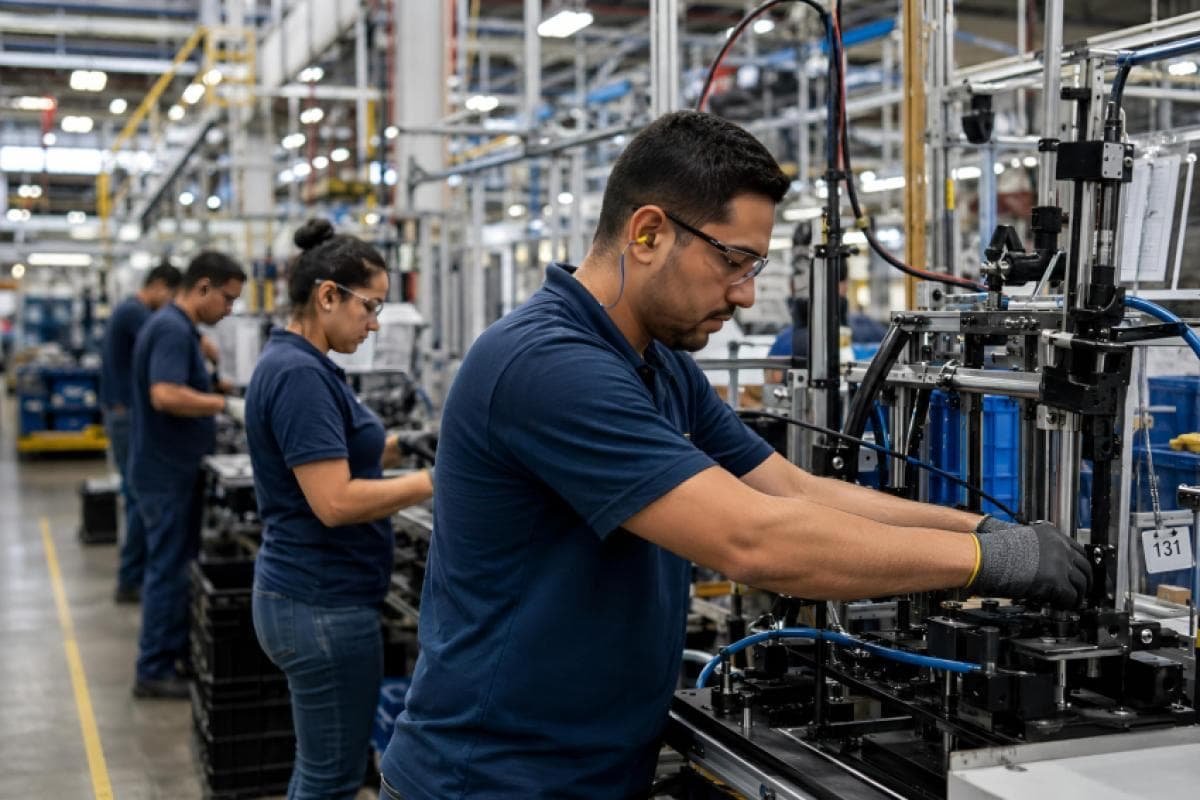
Brazil’s Congress has approved a constitutional amendment ending the traditional 6×1 work schedule, under which employees work six days and get a single day off.
The Federal Senate approved the amendment on 14 October 2026, introducing a five-day working week, two paid rest days and a gradual reduction in maximum weekly working hours from 44 to 40, without reducing salaries. Because the Senate passed the same text the Chamber of Deputies approved in May, no presidential sign-off is needed. The amendment moves straight to formal promulgation.
For employers, this goes well beyond working hours. It touches staffing, shift planning, labour costs and how daily operations are organised, and the time to start assessing the impact is now, while the final implementation calendar is still being set.
The current situation
The escala 6×1 is a work arrangement in which employees work six days and get one day off each week. It has traditionally been common in sectors that need continuous operations or extended opening hours: retail, hospitality, manufacturing, logistics and certain service industries.
Brazil’s existing general limit is 44 working hours a week, subject to applicable legislation and specific arrangements. The amendment changes that framework by establishing two paid rest days a week and reducing the maximum weekly working time.
What Changes Under the New Rules?
The amendment introduces a five-day schedule, commonly called 5×2, with two paid rest days a week.
| Area | Previous framework | New framework |
|---|---|---|
| Weekly working schedule | Six working days, one rest day | Five working days, two paid rest days |
| Maximum weekly working time | 44 hours | 40 hours after the transition |
| Salary | Existing contractual salary | No salary reduction from the reform |
| Weekly rest | At least one rest day | Two paid rest days, one preferably on Sunday |
The amendment also allows for differentiated arrangements in certain circumstances, including specific rules for employees under special working-time regimes. Its scope and application have to be assessed against the relevant employment relationship, applicable legislation and collective agreements.
When the New Rules Take Effect
The transition runs in two stages after formal promulgation. Sixty days after promulgation, the 5×2 schedule becomes mandatory and the maximum working week drops to 42 hours. Twelve months after that first stage, it drops further to 40 hours.
The exact calendar dates depend on when promulgation happens. This transition period gives employers time to review their working arrangements, but it doesn’t remove the need to start preparing early.
What This Means for Employers
The practical impact varies by sector, operating model and current working schedules, but four areas stand out.
Staffing and shift planning. Businesses that operate six or seven days a week may need to reorganise staffing to maintain the same service level with fewer regular hours per employee. That can mean additional employees, revised shift patterns or a different allocation of hours across the week. Retailers, restaurants, hotels and logistics operators are among those where this matters most.
Labour costs. Cutting maximum working hours without a corresponding salary cut raises the effective hourly cost of employment for workers whose hours fall. Reduce a working week from 44 to 40 hours while keeping the same monthly salary, and the effective hourly rate rises by 10%. That doesn’t automatically mean total employment costs rise by 10% too. The real impact depends on staffing requirements, productivity, overtime arrangements and how the business reorganises its operations, so assess these together rather than treating the change as a simple payroll adjustment.
Productivity and operational efficiency. Businesses may need to rethink how work is organised to maintain output and service levels: better workforce planning, redesigned processes, automation where it’s commercially justified, and a fresh look at how responsibilities are split between shifts. A manufacturing facility, a retail business and a professional services company all face this differently.
Employment contracts and collective agreements. Review existing employment arrangements and identify where working schedules, contractual provisions or collective agreements need adjusting, paying particular attention to sectors with differentiated working-time arrangements. The amendment sets the new framework, but its practical application still depends on the rules governing the relevant employees.
Why Foreign Companies Should Prepare Now
For international companies in Brazil, this reform belongs in broader operational and financial planning, not just an HR update.
If you’re assessing a Brazilian subsidiary, build realistic assumptions about working hours and staffing costs into your business case from the start. If you already operate here, review your current schedules and identify which employees and processes are likely affected. And if you work through local partners, consider whether changes in their staffing and operating costs could affect service delivery, pricing or contractual arrangements.
The goal isn’t simply complying with the new maximum working hours. It’s understanding how the change affects the way your Brazilian operation actually functions.
What to Do Next
While the formal implementation timetable is being finalised, start with four practical steps. Review current working schedules and identify employees working under a 6×1 arrangement or above the future 40-hour limit. Assess staffing requirements to see whether existing teams can maintain operational coverage under the new framework. Model the financial impact by reviewing payroll assumptions, potential recruitment needs and the effective hourly cost of employment. And review contractual arrangements, identifying employment contracts, collective agreements and operational procedures that may need adjusting.
Build the results into your workforce planning and financial forecasts before the transition deadlines arrive.
At Ipanema International, we help international companies establish and develop their operations in Brazil, combining market entry and business development with local operational support. Changes to Brazil’s labour framework can affect more than HR, they can shift operating costs, staffing models and how a Brazilian subsidiary is organised day to day. If your company is assessing what Brazil’s new working-time framework means for your operation, get in touch to discuss your situation.
Supporting Your Business in Brazil
At Ipanema International, we help international companies establish and develop their operations in Brazil, combining market entry and business development with local operational support.
Changes to Brazil’s labour framework can affect more than HR. They can influence operating costs, staffing models and the practical organisation of a Brazilian subsidiary.
For companies planning an entry into Brazil or reviewing an existing operation, understanding these requirements is an important part of building a sustainable business model.
If your company is assessing the implications of Brazil’s new working-time framework, contact Ipanema International to discuss your situation.