
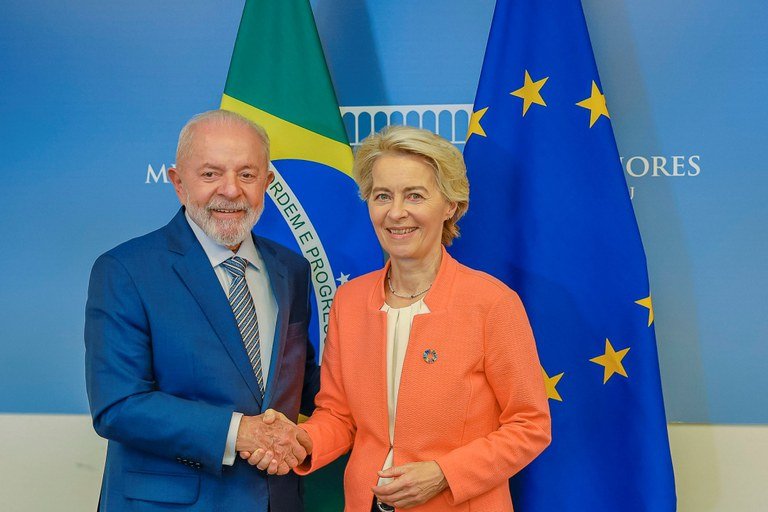
It has been in the works for over two decades, and now, with negotiations finalised, the historic trade agreement between the European Union and the countries in the Mercosul – or Mercosul in Spanish – trade bloc is in effect. The agreement affects more than 780 million people between the two trade blocs and nearly a quarter of global GDP. Its significance reaches well beyond trade alone. At a time of growing geopolitical fragmentation and uncertainty, supply chain disruptions and competition for natural resources, the agreement reflects a broader shift in strategic relationships.
Above all, the urgency with which the European Commission pushed the agreement through highlights how strategically important Latin America has become to Europe as a long-term economic and geopolitical partner.
Lower tariffs, fewer barriers
At its core, the EU-Mercosul agreement is designed to gradually reduce both tariffs and non-tariff barriers between the two regions. Once fully implemented, the agreement will eliminate tariffs on the vast majority of goods traded between the European Union and Mercosul countries, covering sectors such as automotive, machinery, chemicals, pharmaceuticals and agriculture.
For European exporters, the agreement improves access to markets that have historically maintained relatively high import duties on industrial and manufactured goods. At the same time, Mercosul exporters will gain broader access to the European market, particularly in agriculture, food products and raw materials. Sensitive sectors remain partially protected through quotas and phased transition periods.
Beyond tariffs alone, the agreement also introduces a broader framework aimed at increasing regulatory cooperation and legal predictability between both blocs. The treaty includes provisions on customs cooperation, technical standards, intellectual property, public procurement and dispute settlement mechanisms designed to facilitate cross-border trade and reduce administrative friction over time.
In practice, this means customs procedures and documentation requirements are expected to become more standardised and transparent, while formal channels for resolving trade disputes between the European Union and Mercosul countries are strengthened. The agreement also establishes institutional frameworks for ongoing cooperation and dialogue between regulators and trade authorities on both sides.
Strategic objectives
While the agreement is fundamentally centred around trade liberalisation, its broader strategic significance is difficult to ignore. In many ways, the EU-Mercosul agreement reflects a changing global economic landscape shaped by geopolitical fragmentation, supply chain vulnerability and growing competition for strategic resources.
For Europe, the agreement forms part of a wider effort to diversify trade relationships and reduce overreliance on individual markets such as China. Mercosul countries offer access to agricultural commodities, critical raw materials, renewable energy potential and a large consumer market at a time when supply chain resilience and resource security have become increasingly important policy priorities.
The agreement also aligns with broader trends such as friend-shoring and the regional diversification of industrial supply chains. As global companies reconsider concentrated sourcing strategies following years of geopolitical tensions and supply chain disruptions, South America is increasingly viewed as a region with long-term strategic relevance.
For Mercosul countries, the agreement represents an opportunity to further internationalise their economies and strengthen integration with global markets. Countries such as Brazil and Argentina possess vast industrial, agricultural and natural resource capacity, yet historically remained relatively closed compared to other major economies.
Closer economic integration with Europe could accelerate foreign direct investment, infrastructure development, industrial modernisation and technological cooperation across the region. With large domestic markets, expanding energy sectors and abundant natural resources, Mercosul economies are seen as being well-positioned to unlock significant long-term economic potential.
Implementation and market effect
With the agreement entering into effect on 1 May 2026, the focus has now shifted from negotiation toward implementation and long-term economic integration. While many tariff reductions and regulatory changes will be phased in over the coming years, the agreement already provides businesses and investors with significantly greater clarity regarding the future direction of trade between Europe and the Mercosul bloc.
Some sectors are positioned to experience immediate structural advantages. European manufacturers in industries such as automotive, machinery, chemicals and pharmaceuticals will benefit from improved market access and lower import costs across South America. At the same time, Mercosul exporters in agriculture, food products, mining and raw materials are set to become substantially more competitive within European markets as trade barriers continue to decline.
The agreement is also expected to drive investment into logistics, infrastructure, renewable energy and industrial supply chains throughout the region. As trade volumes between both blocs expand, ports, transportation corridors and distribution networks will become increasingly important strategic assets.
Looking ahead
For European companies, the agreement arrives at a time when businesses are actively restructuring international sourcing strategies, diversifying supply chains and reducing dependency on concentrated markets. South America — and Brazil in particular — is rapidly emerging not only as a supplier of strategic resources, but also as a growing industrial and consumer market with significant long-term potential.
Although the full economic impact will materialise over time, companies are already positioning themselves around the opportunities created by deeper economic integration between Europe and Mercosul.
In the end, the agreement reflects a growing strategic alignment between Europe and South America — one that is expected to shape trade, investment and industrial cooperation for decades to come.